
This is the third installment in our four-part blog series examining where the industry stands today in capturing the value of supplementary cementitious materials (SCMs). Since the benefits of SCMs scale directly to how much portland cement is replaced, having a reliable supply is critical for success. Heidelberg Materials has taken a comprehensive approach to increasing SCM supply, both by opening and upgrading facilities and by developing new technologies that boost output. The result is enhanced access to SCMs, supporting stronger performance in your concrete and greater sustainability on your projects!
Installments of this series were first published as the article "What’s Up with SCMs?” in the NRMCA’s Concrete InFocus magazine, Winter, 2025.
Fly ash is a recycled waste product from coal combustion at electrical power plants, consisting largely of silica. Volcanic ash, similar to today's fly ash in chemistry, was used as an SCM in concrete dating back to the Roman Empire. Many Roman structures have lasted for thousands of years. In modern times, fly ash’s potential as a pozzolanic ingredient for use in portland cement concrete was recognized as early as 1914, although widescale commercial use didn’t occur until the 1930s.
The first technology developed to produce commercial fly ash used electrostatic precipitators or baghouses to filter the ash out of the flue gas. Over time, supplies of high-quality fly ash produced using this direct method tapered off, as coal-fired power plants closed or modified their operations.
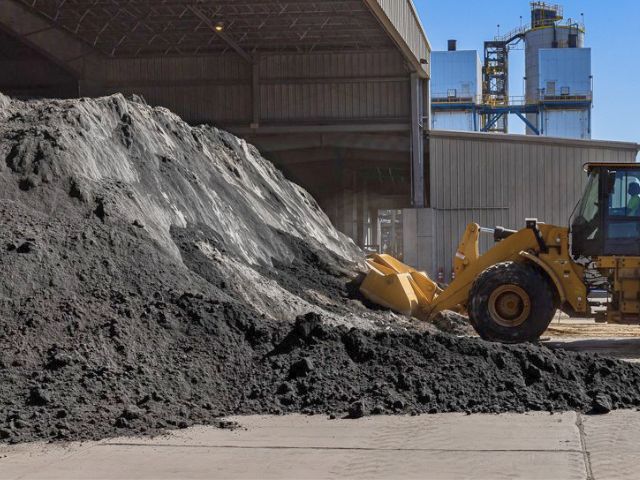
Data from the American Coal Ash Association (ACAA) shows coal combustion product (CCP) production declined at the same time as demand was rising. The rise in demand spurred the industry to develop methods of “beneficiation,” i.e., treating or altering the physical properties of previously stored fly ash to make it available to the concrete industry and other industrial applications. Beneficiation can be performed on ash reclaimed from landfills or ash ponds (also known as ash basins or surface impoundments), which coal-fired plants historically used to store the ash.
Some harvested coal ash needs only to be dried and screened to produce specification-grade material for use in concrete, while other harvested coal ash requires treatments such as thermal beneficiation to make it suitable for use in concrete. The SEFA Group, the largest recycler of harvested fly ash for use in concrete products in the U.S., was the first company in the world to reclaim and recycle coal ash from ponds for concrete on a commercial scale. The company’s patented STAR® thermal beneficiation process converts harvested ash from legacy coal ash ponds into high quality SCMs. Heidelberg Materials acquired SEFA in 2023. Based in Lexington, South Carolina, the operations of The SEFA Group included five business units, five utility partners, 20 locations and more than 500 employees. Through this acquisition, Heidelberg Materials currently supplies quality fly ash to more than 800 concrete plants in 13 states.
Heidelberg Materials’ STAR technology takes coal ash and dries it using heat generated by the processing facility. The only energy demand for the drying process is electricity to operate fans and conveyors. After drying, the material is conveyed through fully enclosed pipelines and valves to the thermal processing unit, where it is heated and swirled. STAR stands for “staged turbulent air reactor;” the air is “staged” because it is introduced via multiple ports and “turbulent” because air velocity and direction are varied to improve combustion. Once initiated, STAR is a self-sustaining exothermic process that requires no outside fuel sources and produces no residual ash waste stream. When the fly ash has been transformed into a beneficiated material, it is cooled and conveyed to a baghouse where it is collected. Captured heat cycles back to the drying operation.
Because each coal ash impoundment and each utility are unique, Heidelberg Materials’ fly ash team works directly with utilities to find beneficiation solutions that meet their needs. When harvested ash does not require thermal beneficiation to produce specification-grade material for concrete applications, customized processing solutions to recycle coal ash can be identified.
Replacing a portion of portland cement with low loss on ignition (LOI) STAR® fly ash enables better control of air-entraining agents and other admixtures. It can be used at high dosage rates to produce low-carbon mixes.
Contact Heidelberg Materials today to learn more.
Look for Part 4 of our series, “Recycled Construction/Demolition Materials as SCMs,” or click here to read Part 1, “The Benefits of SCMs” and here to read Part 2, “Expanding Availability of Slag Cement.”